|
NEO BOYS Interview, Ethiopian Casio lullabies, Dragging an Ox + More…. ͏ ͏ ͏ ͏ ͏ ͏ ͏ ͏ ͏ ͏ ͏ ͏ ͏ ͏ ͏ ͏ ͏ ͏ ͏ ͏ ͏ ͏ ͏ ͏ ͏ ͏ ͏ ͏ ͏ ͏ ͏ ͏ ͏ ͏ ͏ ͏ ͏ ͏ ͏ ͏ ͏ ͏ ͏ ͏ ͏ ͏ ͏ ͏ ͏ ͏ ͏ ͏ ͏ ͏ ͏ ͏ ͏ ͏ ͏ ͏ ͏ ͏ ͏ ͏ ͏ ͏ ͏ ͏ ͏ ͏ ͏ ͏ ͏ ͏ ͏ ͏ ͏ ͏ ͏ ͏ ͏ ͏ ͏ ͏ ͏ ͏ ͏ ͏ ͏ ͏ ͏ ͏ ͏ ͏ ͏ ͏ ͏ ͏ ͏ ͏ ͏ ͏ ͏ ͏ ͏ ͏ ͏ ͏ ͏ ͏ ͏ ͏ ͏ ͏ ͏ ͏ ͏ ͏ ͏ ͏ ͏ ͏ ͏ ͏ ͏ ͏ ͏ ͏ ͏ ͏ ͏ ͏ ͏ ͏ ͏ ͏ ͏ ͏ ͏ ͏ ͏ ͏ ͏ ͏ ͏ ͏ ͏ ͏ ͏ ͏ ͏ ͏ ͏ ͏ ͏ ͏ ͏ ͏ ͏ ͏ ͏ ͏ ͏ ͏ ͏ ͏ ͏ ͏ ͏ ͏ ͏ ͏ ͏ ͏ ͏ ͏ ͏ ͏ ͏ ͏ ͏ ͏ ͏ ͏ ͏ ͏ ͏ ͏ ͏ ͏ ͏ ͏ ͏ ͏ ͏ ͏ ͏ ͏ ͏ ͏ ͏ ͏ ͏ ͏ ͏ ͏ ͏ ͏ ͏ ͏ ͏ ͏ ͏ ͏ ͏ ͏ ͏ ͏ ͏ ͏ ͏ ͏ ͏ ͏ ͏ ͏ ͏ ͏ ͏ ͏ ͏ ͏ ͏ ͏ ͏ ͏ ͏ ͏ ͏ ͏ ͏ ͏ ͏ ͏ ͏ ͏ ͏ ͏ ͏ ͏ ͏ ͏ ͏ ͏ ͏
|
~~~~~~~~~~~ :::IN THIS MONTH’S NEWS:::
NEW RECORDS BY
Neo Boys
Dragging An Ox Through Water
Wesenyeleh Mebreku
Harlan Silverman Repress!!!
SOONER OR LATER
An interview with Neo Boys
by Maria ‘Nenet’ Barrios
NEW IN DISTRO SHOP
Arthur Russell
Nass El Ghiwane
CSR SIGNUP
PDX & NYC EVENTS
NTS RADIO MIX ~~~~~~~~~~~
|
|
Listening to NEO BOYS reminds me of everything I value in music. Portland’s first all-female punk band were only teenagers when they made their first recordings in 1978. The sound is homemade but with passion and intention. The lyrics are funny, mad, often brilliant, snarling with the disdain of someone who cares enough to be pissed off. There’s no cynicism or pretension. These are exuberant, reckless, joyous recordings made for and with a small community that the band loved and admired. This is it, the real thing. The fact that this music resonates nearly 50 years later means the battle is ongoing. It’s more lopsided than ever, but as long as the worlds represented by this music exist, the bastards haven’t won. Read on for an interview with the NEO BOYS by Maria Barrios, and to hear more music to stiffen the back and nourish the spirit. Fight on our time ain’t long, Mississippi Records
|
|
|
NEO BOYS LP
Listen / Order
This is it! One of Portland's greatest punk bands! The first recorded all female punk band in the city! KILLER. This is a special art edition reissue of the bands 1980 debut single as well as their 1982 EP, Crumbling Myths. Excellent remastered sound. Small run of vinyl on old school "tip on" cover. And a 32 page 12 X 12 full color book that tells the story of the band in their own words!! Includes tons of images and Portland show flier history. For fans of bands like The Raincoats, Slits and Kleenex, this is a must. Great lyrics. Minimal tough music. The mana. |
|
|
|
|
Dragging An Ox Through Water
Whole Earth Cataloged
Listen / Order Twelve years in the making, a new record by Portland's idiosyncratic master of ultra modern folk music Dragging An Ox Through Water. Old school electronic oscillations and blips meet solid guitar playing and singing. The lyrics alone are worth the price of admission. Nothing obvious is ever said and every word gleens with layers of meaning. Dragging An Ox Through Water is Brian Mumfords' cult long running art music project. Beloved in Portland. Willfully underground. The real stuff. A modern masterpiece. |
|
|
|
|
|
Wesenyeleh Mebreku
Resonance Of Time
Listen / Order
Electronic lullabies and folk songs from Ethiopia! A landmark recording from Ethiopia’s vibrant cassette era of the 1980s, Resonance of Time features pioneering composer Wesenyeleh Mebreku reimagining Ethiopian folk melodies through the humble circuitry of an early Casiotone keyboard. |
|
|
|
|
|
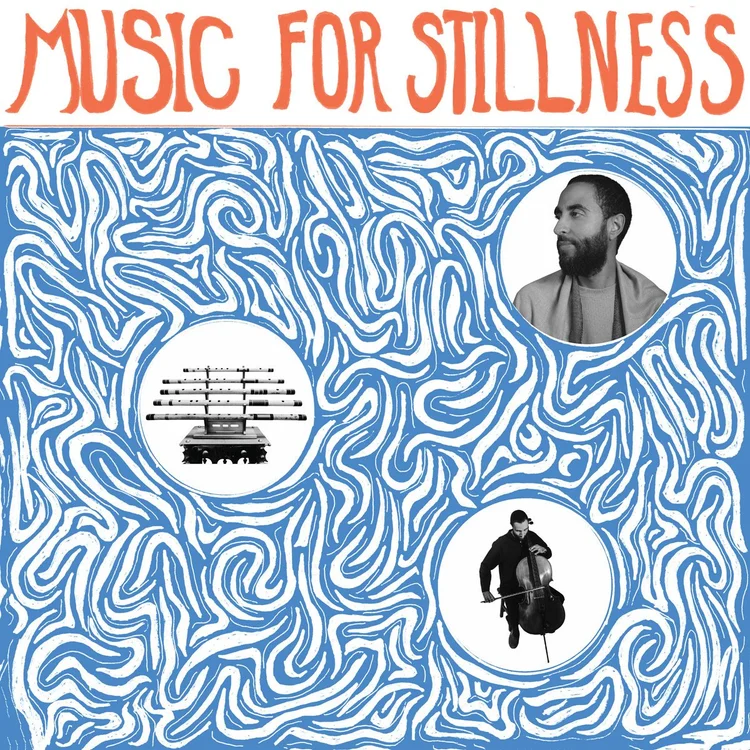
Harlan Silverman
Music for Stillness
(LIMITED REPRESS!)
Back by popular demand, the stunningly gorgeous solo LP from Harlan Silverman (Cosmic Tones Research Trio). Healing music for repeat listening!!!!
“Music for Stillness” unfolds slowly, inviting rest and quiet presence. The bansuri flute leads the sound, its emotive, vocal-like quality weaving melody atop cello and ambient textures. Influenced by Indian classical music, Japanese environmental music, and Western ambient music, the album leaves space for the listener to choose how deeply to engage. The music offers a single question: What might peace sound like?
|
|
|
|
|
By Maria ‘Nenet’ Barrios Formed in Portland, OR in 1978, Neo Boys are widely considered the city’s first all-women punk band. A fixture in the underground scene from their inception until their last record, in 1983, they played everywhere they could and helped champion the local scene, putting Portland on the map and opening for the likes of Television, Patti Smith, and Nico.
To celebrate the release of NEO BOYS (featuring their first EP from 1980 and Crumbling Myths, their 1983 release), music writer and former Mississippi Records head Maria Barrios spoke with siblings Kim (vocals) and K.T. Kincaid (bass) and drummer Pat Baum about the new album, the band’s history, and staying true to their punk ethos.
Maria Barrios: I wanted to ask everyone how does it feel to do another reissue?
K.T. Kincaid: Well, it's very flattering that he Mississippi asked. It's unexpected and very flattering.
Kim Kincaid: It's been nice that it's been kind of driven by interest, that we haven't sought this out or anything, so that makes it feel very flattering that people would still be interested after 40 years.
Pat Baum: Forty… forty-eight years, actually.
Kim Kincaid: This past weekend I went around to local record stores with posters for the re-release party, and every record store I went into I would hand them the poster and say, "Can you put this up,” and they'd be like “Neo Boys, hell yeah!" People 30 years younger than me. I don't feel like when we were active there was that kind of response. So the recognition now is really nice. It feels good to know that our music is appreciated. K.T: Especially by other girls. There's a band that's gonna play at this little after party for the record release, and it's a Neo Boys cover band. That was just flattering to find out that such a thing existed. Maria: Pat, you once said that back then, if you wanted a scene, you had to make it yourself on your own terms. K.T.: When we were playing, it was just so new. No one had ever heard of punk rock or New Wave. Kim: It was also a youth scene too. The majority of us that were part of it were teenagers. I feel like when you're younger, you just kind of do what you want to do. You don't have this idea of what it should be, you just kind of do it.
Pat: The whole process was almost evolutionary: you got an instrument, learned to play it, found a place to rehearse, found a place to play, and maybe put out a record. We had a little mentorship, too. Fred Cole [of Dead Moon] had already put out a couple of records, and even though I wouldn't say I wanted a record to sound exactly like that, it was precedent that you could put out your own record. Then with Greg's [Greg Sage, of the Wipers and Trap Records] expertise, he took it up to a much higher level. But just the fact that you could show up one day not really knowing how to play, go buy an instrument, learn it, play it, and then in six months you've got a record out. That's just unheard of, really.
K.T.: And it wasn't just us that was doing this. Because the scene was so small, we acted in a collective way. Some of the posters in the booklet have five or ten bands on one bill, because we all wanted to help each other out, and because finding a place to play was hard. Once you got kicked out of somewhere, it could take a while to find another spot. So everyone wanted everyone else to succeed too. Pat: If a band broke up, that was okay, you could form another one. It was like a boiling pot. It was like making a stew, some other thing was always going to rise to the top. You never felt like you were alone. If something broke, somebody would just pass you theirs. There was no kind of jealousy or anything “Oh, they sound better than us,” or anything like that. It was everybody encouraging each other to just do the best that they could. K.T.: At first we even shared instruments before we could afford our own. Everybody plugged guitar and bass into one amp because we didn't have money for a bass amp. Any money we made from shows went straight back into a pot for equipment or recording. We never split it individually. It always went back into supporting the band. |
|
|
|
Maria: I've been thinking about how punk from the late '70s has become this iconic, almost mythologized piece of music history. But I think people forget the people making it were just kids, doing it on a small scale with their friends, with no blueprint. Is that how you experienced it, just being a kid and figuring it out as you went? Kim: Yes, exactly. Especially as a teenager, you don't have history to draw on, so you just try things. That's how you operate. Maria: What made you want to start a band in the first place? K.T.: Kim and I always wanted to be in a band since we were little kids. We were the Partridge Family…
Kim: We were the Partridge Family. We were The Monkeys. We were Frank Sinatra.
K.T.: We were the Rolling Stones. Kim: I think that both Katie and I always loved music, and that was kind of a dream. Not really even a dream, but it was just kind of like playing.
K.T.: But it wasn't until punk happened that it became clear you didn't have to be a boy to play music. That was a huge deal. Maria: Were there specific women in punk who spoke to you and encouraged you to do it yourselves? K.T.: Not many women played instruments at the time. There were plenty of singers, and once in a while a woman who played, but that was rare. What was different about punk was that a woman could sing, and she could sing about particular things, that women were more complex than, “Oh, my boyfriend left me, I'm so sad…”
Pat: Joan Jett and the Runaways were very raw. Horribly produced, too, but they were a band of women just doing it.
Kim: I remember seeing Suzi Quatro… We were kind of attracted to finding women artists even when we were really young. Patti Smith, Nico, Marianne Faithfull.
Maria: Do you have memories of playing live in Portland at the time? Kim: One of our first shows was opening for Television at a tavern. We barely had any material (maybe five songs) and needed a fifteen- or twenty-minute set. We had one song, "Sooner or Later," and just stretched it out for half the set.
K.T.: That was pretty funny. Kim: We felt strongly, especially since a lot of us were underage, about demanding split shows. At the time, if you didn't put on your own show, the bars wouldn't book you. We didn't want to just be booked by a bar. We'd negotiate a split show: an over-21 show, then an all-ages show before it. That was pretty significant for the time, since there wasn't much space for kids to go otherwise. Maria: Do any of you still make music? I know some of you moved into other creative projects. K.T.: I don't. I paint now. Pat: I still play, and I've taught drums, though I'll only teach women. I've sought out women to play with, and otherwise I play alone along with records. I have a kid in the house now, so it's a way to stay active. Drumming is very physical but also satisfying. The hits have to be precise, and there's a lot of power in it. It keeps my brain and body coordinated. I hope to play until I physically can't hold a stick anymore. |
|
|
|
Maria: Things have changed so much in how music gets distributed. It feels almost like a fairy tale now, a time when people just talked to each other and shared music with no algorithms or middlemen. What was it actually like distributing your own music, pressing your own record, calling record stores? K.T.: It was tough! It wasn’t easy, much harder without the internet, distributors, or interested labels. But when you're young, you just figure it out. I remember going to the library, using phone books from every city, finding record stores and calling them one by one. Mostly, people weren't interested. There weren't many independent record stores outside places like New York, L.A., or San Francisco. Portland was pretty insular. Touring bands often skipped Portland entirely because it was too small to bother with. Pat: We'd take out an ad in a magazine listing the price of the record and where to send money. We'd get letters with a dollar ninety-nine plus fifty cents shipping enclosed, and we had to ship records out by hand. I remember getting an annoyed letter once from someone saying, "You already cashed my check, where's my record?" We even kept a letter from Calvin [Johnson of K Records], who wrote in to order one. That's genuinely how it worked. You solicited people to send money, then mailed them a record. Maria: I really want to talk about the lyrics, because they're so good. How did those lyrics come to be? Was there anything you were reading that inspired you, or did they just come out unfiltered? Kim: Early on, when we first started playing, on the single, and even some songs on the K compilation, we were such a collective that everyone submitted lyrics. Jennifer wrote some, I wrote some, and I wrote most of what became the “Crumbling Myths” EP and the single. I think having a complicated childhood was a big part of it. Writing was really something for me. I was kind of a loner, especially after Katie moved out of the house. When you're young, you're taking everything in and trying to process how the world works. Some songs were about specific things happening around us. "Give Me the Message," was influenced by a biography I'd read about the dancer Nijinsky. It was really just a creative outlet I needed at that time in my life. Katie and I lost our mother when we were very young, and we were on our own for a while. I think that shaped the two of us in a pretty atypical way growing up. Maria: Do you think that loss made music into a kind of protective fantasy, like a world you could retreat into? K.T.: I feel like we didn't fit in with our peers well, so it was like a family in a certain way, and kind of our version of high school. Because we didn't really have those experiences that a lot of people have. We’re weirdos.
Kim: So that in itself set us up where we kind of went in life with the Neo Boys. Maria: I'd like to close by asking, thinking back on being in Neo Boys, what did you like or are grateful for? Kim: I think it's the interest from young women. K Records released our record thirteen years ago without us seeking it out, and now, years later, something else is coming out again because people are interested. Hearing that it's inspired young women has been the most heartfelt part of this whole experience. K.T.: I agree. We've gotten letters from women who've written about how our music was meaningful to them, and that really touches your heart, that it's even possible. As for back in the day, the ethos of punk has stayed with me my whole life, that you just do things yourself. If you want to learn how to do something, dive in there and do it. I don't know if "joy" is exactly the word, since it could be a struggle too, but it's definitely something that shaped who I am. Kim: I agree. Always wanting to collaborate on projects, even now in the garden, comes from being in the band.
Pat: One of the biggest things I've carried with me for the rest of my life is that you're never the sole author of anything, especially in a group. Everyone's contribution matters equally, that's why we were always glad we split the copyright and royalties equally, unlike a lot of bands. The value of everyone's contribution in a band is huge. You couldn't have a band without all of the people…
Kim: That's what makes it a band! Pat: I remember more of us in practice, and the collaboration, and I remember sitting, waiting, behind the drums just for things to develop, for the song to sort of come together. I remember those times more with great joy than I do actually playing live. I do love to play live, and I did enjoy that, but I just remember all those crazy rehearsal studios that we had, and that there was just an incredible vibe in there once we got in there and started working. I've never had anything like that in the rest of my life. There's just something about being with people that you trust and that you know that you're gonna make something beautiful together. |
|
|
|
GET THE NEO BOYS ON VINYL HERE |
|
|
|
AU-1031-1
Arthur Russell - Love Is Overtaking Me
Order The beloved Love is Overtaking Me compilation, restored and remastered from a recently found pristine tape reel!! This astoundingly beautiful record gets even more so. Features Arthur’s folk, pop, and country songs including “Planted a Thought”, “Close My Eyes”, and “I Couldn’t Say It To Your Face.” |
|
|
|
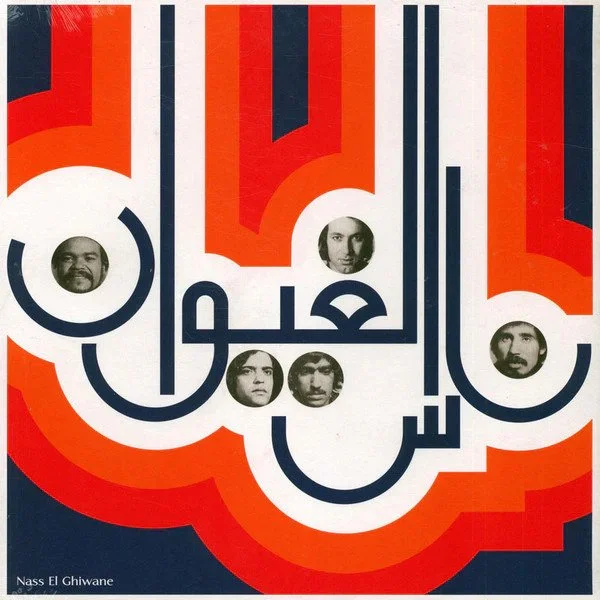
SUD003
Nass El Ghiwane - Nass El Ghiwane
Order Formed in 1971, Nass El Ghiwane's five members first performed together as actors under the Moroccan playwright and director Tayeb Seddiki. Following their debut performance as a band in Rabat at Seddiki's Mohammed V Theatre, their songs became the 1970s anthems of Moroccan youth -- nationalist, rebellious, experimental and bygone all, at once. This reissue of their second LP, fully re-mastered, featuring exact repro of the original cover from 1973 is one of the most in-demand LPs in their legendary discography. |
|
|

|
Meet and Greet with Smashed Plastic Wednesday, July 22nd
8 - Late PM
At Red Fox, Portland With music provided by DJ Eric I (Mississippi Records) The Folks who currently press our records are coming to Portland to say hello! To celebrate, Mississippi Records' Eric I will be at The Red Fox bar, DJing all night long. If you're looking for a pressing plant to work with, here's a chance to make the connection. These guys are the real deal. Old school, hard working, down with the people. Come on down for a relaxing drink. |
|
|
Vaya Con Discos Cumbia Dance Party Saturday, July 25th
8 - Late PM
At Mississippi Records, Portland The Vaya Con Discos DJ crew will bring the thunder! Come on down and listen to Cumbia and other Latin rhythms |
|

|
|
|
|
Latest NTS Mix
Songs of beauty, joy, and sorrow for the summer of '26. Borderland Norteños, Iranian weepers, Japanese reel-to-reel electronics and more
|
|
Community Links Mississippi Records Website
Visit the site to get our label's records and tapes direct from us - we are constantly rotating our selection of mixtapes, new records from labels we distribute, and discounted out-of-print records, so be sure to check in often!
www.mississippirecords.net Mississippi Records Portland Store
We are open EVERY DAY from 12 to 7 PM!
(our stereo repair and retail shop is open Friday - Sunday, 1 to 6 PM).
WE ARE EXCITED TO BUY YOUR RECORD COLLECTIONS!
Please drop by anytime to sell stuff. We always have a buyer on duty and you do not need an appointment. Paying out 50 - 60% of our retail price (NOT - dumb internet prices though...Mississippi store prices) Email mississippierici@gmail.com if you have any questions about the shop. Mississippi Records CSR
Our Community Supported Records program directly supports the label. Get each Mississippi LP at a discount as it's released, no matter how limited, plus special schwag and gifts on occasion. Limited to 300 spots. The CSR contributions help us pay for record pressings and generally stay afloat.
More details here…
www.mississippirecords.net/csr
Mississippi Records Bandcamp
There are hours and hours worth of albums available for free listening, and a whole lot of the releases are "pay what you want" if you want to download ‘em. Check it out -
https://mississippirecords.bandcamp.com/
Toody Cole/Junkstore Cowboy
Toody Cole has shuttered her Junkstore Cowboy Shop in our basement, but that does not mean you can't get your Dead Moon / Pierced Arrows / Rats / Range Rats / Tombstone schwag and records still from her badass online store.
https://www.deadmoonusa.com/
Red Hook Mutual Aid
We’re proud to have a studio in Brooklyn’s Red Hook neighborhood, which hosts one of the most active mutual aid groups in the city. Learn more about the organizing activity here.
https://sites.google.com/view/redhook-mutualaid
|
|
|
|